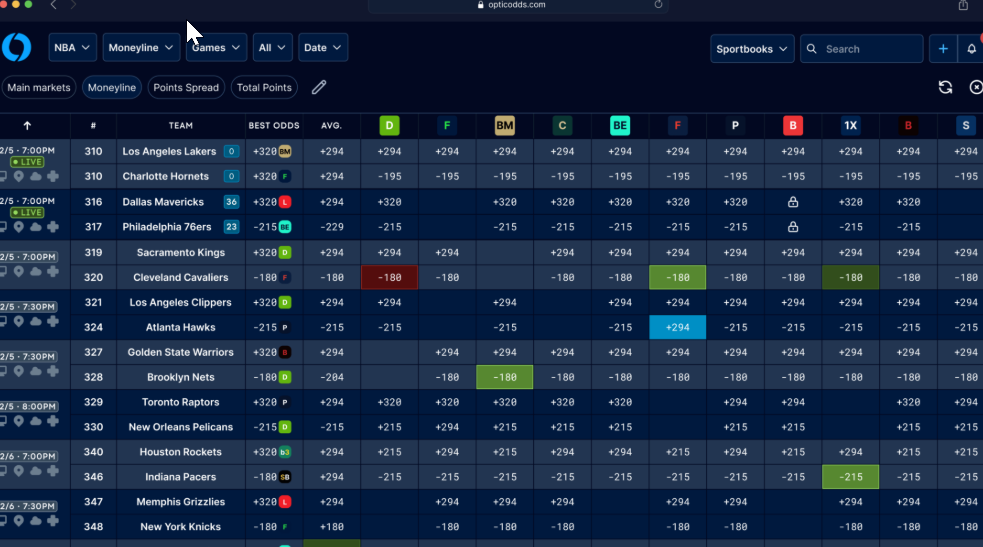
A few years ago, I used to think sports betting markets were mostly driven by intuition, public sentiment, and bookmaker instinct. Odds moved, lines shifted, and narratives dominated headlines. But the deeper I started studying the industry, the clearer it became: modern sports betting is no longer powered by gut feeling. It is powered by data.
Today’s markets operate in a highly analytical environment where algorithms, predictive modeling, and real-time statistics shape everything from pre-match odds to in-play adjustments. Data analytics has quietly transformed the ecosystem into something far more complex and efficient than many casual observers realize.
From Opinion-Based Lines to Data-Driven Pricing
Historically, bookmakers relied heavily on traders who assessed team form, injury reports, and public sentiment. While expertise still matters, modern pricing models are now heavily supported by statistical engines.
Advanced analytics evaluate:
- Historical team performance
- Player efficiency metrics
- Expected goals (xG) models
- Pace of play and possession data
- Weather impact modeling
- Injury replacement value
For example, in football markets, expected goals models have become standard. Instead of looking only at final scores, analysts now assess shot quality, shot location, and probability of conversion. A 1–0 win may not reflect dominance if the expected goals ratio suggests the opposite. This granular level of evaluation feeds directly into odds calculation.
According to industry estimates, global sports betting revenue surpassed $80 billion annually in recent years, and a significant portion of operational budgets at major operators is now allocated to data science and quantitative research teams. That shift alone signals how central analytics has become.
Market Efficiency and the Role of Algorithms
One concept that fascinated me when studying betting markets is market efficiency. In financial theory, an efficient market quickly incorporates all available information into pricing. Sports betting markets increasingly resemble that model.
When major news breaks such as a star player injury, odds shift within seconds. Automated systems scrape verified feeds and trigger algorithmic recalculations. In high-liquidity leagues like the English Premier League or NFL, price adjustments can happen almost instantly.
Algorithms now monitor:
- Betting volume spikes
- Sharp vs public money patterns
- Cross-market arbitrage opportunities
- Line movement velocity
The more data the system processes, the faster it adapts. This reduces exploitable inefficiencies and creates tighter margins. As a result, long-term edge has become harder to sustain without sophisticated modeling.
The Rise of Live and In-Play Analytics
One of the biggest transformations driven by data analytics is live betting. In-play wagering now accounts for more than half of total betting volume in many regulated markets.
Live models evaluate real-time inputs such as:
- Possession percentages
- Shot attempts
- Time remaining
- Foul accumulation
- Momentum indicators
I remember analyzing a live basketball market and watching how the model recalibrated win probabilities after every possession. It felt less like traditional betting and more like watching a real-time probability engine at work.
This is possible because data feeds update continuously, sometimes multiple times per second. Operators integrate tracking data, AI pattern recognition, and probabilistic simulations to adjust lines dynamically.
Without analytics infrastructure, live betting at scale simply would not function.
Data Science Teams Inside Betting Companies
Modern betting platforms increasingly resemble technology companies. Many employ data scientists, statisticians, and machine learning engineers who build proprietary models.
Their responsibilities include:
- Creating predictive models for match outcomes
- Detecting suspicious betting patterns
- Optimizing risk exposure across markets
- Managing pricing volatility
Risk management is especially interesting. Operators do not simply try to predict outcomes. They manage exposure. If heavy money enters one side of a market, algorithms may shift odds not because the probability changed, but to balance risk distribution.
That subtle distinction changed how I view odds movement. Sometimes price shifts reflect probability changes. Other times, they reflect liability management.
Behavioral Data and Consumer Patterns
Data analytics does not only influence odds pricing. It also shapes user experience.
Platforms track anonymous behavioral patterns such as:
- Preferred bet types
- Frequency of play
- Time of activity
- Reaction to promotions
While this can improve personalization, it also raises regulatory questions around responsible gambling and ethical data use. Regulators in jurisdictions like the United Kingdom and parts of Europe have increased scrutiny on how consumer data is used to target betting behavior.
Analytics therefore operates in two dimensions: performance modeling and compliance monitoring.
Machine Learning and Predictive Modeling
Machine learning models now simulate thousands of potential game outcomes before an event even begins. Monte Carlo simulations, regression models, and neural networks are increasingly common tools.
For example:
- In baseball, pitch-by-pitch data feeds predictive scoring models.
- In football, tracking data measures player positioning in real time.
- In tennis, serve speed and rally length data influence win probability shifts.
The level of granularity available today would have been unimaginable two decades ago. Some leagues now provide advanced tracking metrics that feed directly into betting markets.
This deep integration between sports data providers and wagering operators underscores how intertwined analytics has become with modern betting infrastructure.
Is the Market Becoming Too Efficient?
One question I often reflect on is whether increased analytics is making the market too efficient. If every operator uses advanced modeling, does that eliminate opportunity?
In highly liquid markets, margins are indeed thinner. However, smaller leagues or niche sports may still exhibit inefficiencies due to lower data depth.
Additionally, innovation never stands still. As models improve, so do modeling techniques. The competitive landscape becomes less about intuition and more about computational capability.
The evolution mirrors financial markets. Quantitative trading firms transformed stock exchanges decades ago. Sports betting appears to be following a similar path.
The Future of Analytics in Betting
Looking ahead, several trends seem likely:
- Greater integration of artificial intelligence
- Enhanced real-time biometric tracking
- More automated compliance monitoring
- Deeper predictive modeling at player level
As wearable technology and tracking systems improve, data depth will expand. That expansion will further refine pricing accuracy.
At the same time, regulators will likely demand more transparency around algorithmic systems, especially in consumer protection contexts.
Final Thoughts
From my perspective, the transformation of sports betting markets through data analytics is one of the most significant shifts in the industry’s modern history. What was once heavily influenced by subjective judgment is now increasingly shaped by structured modeling, probability engines, and machine learning systems.
The casual observer may still see betting as simple speculation. But behind the interface lies a complex analytical framework operating in real time.
Understanding that framework changes how one interprets odds, market movement, and industry behavior. Whether viewed from a research standpoint or an economic lens, data analytics has firmly positioned itself at the center of modern sports betting markets.
And based on current momentum, its influence is only just beginning.